A bedtime story for a child who is scared of the dark
Noah and the Friendly Dark
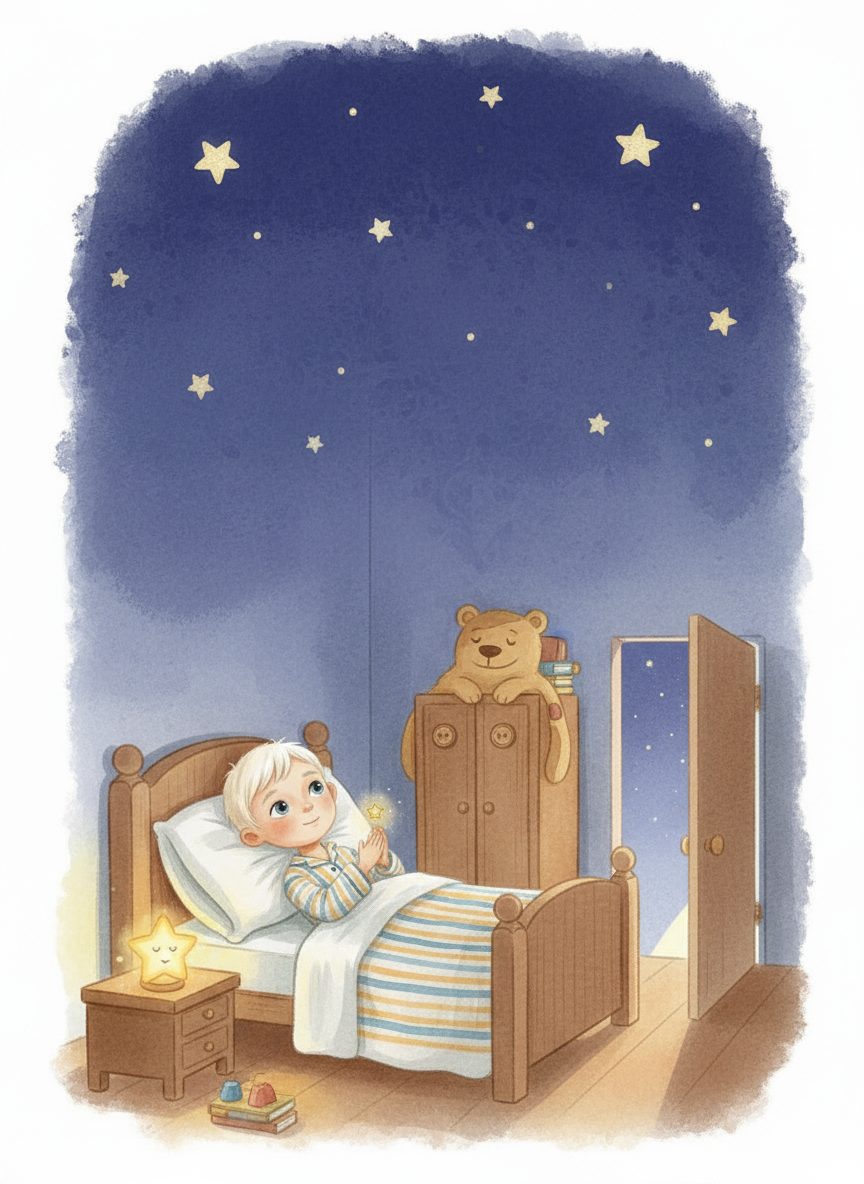
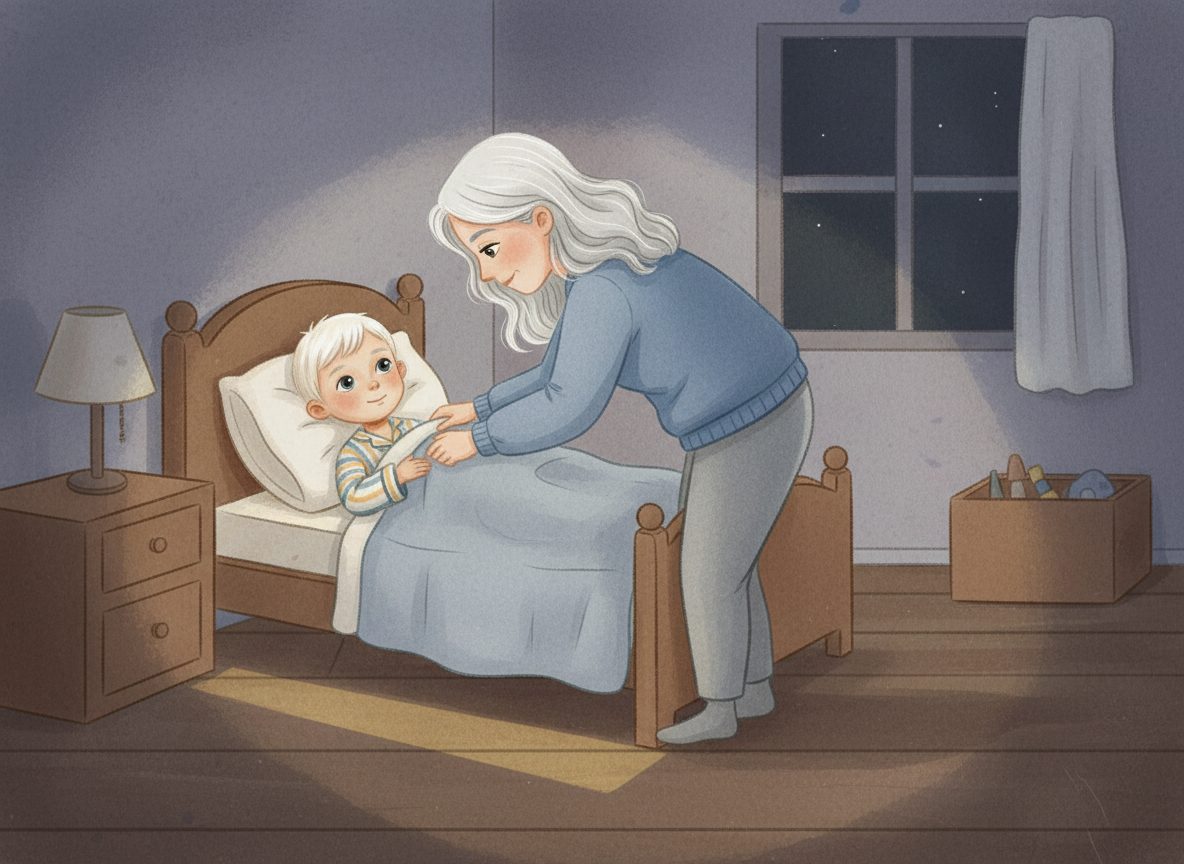
Noah lay in his bed with the blanket pulled up to his chin, and the room was dark in that soft, quiet way rooms get at bedtime. Mom had just tucked him in. She had kissed his forehead twice, once for each cheek of the moon, she said, and she had left the door open a crack so a thin yellow stripe of hallway light came in and lay across the floor like a ribbon.
But even with the ribbon of light, the room looked different than it did in the daytime. Noah blinked. Over by the window there was a tall shape, and it had arms. Big, wide, wobbly arms.
"Mom," Noah called, not loudly, just enough.
Mom came and sat on the edge of the bed, and the bed made its friendly little squeak. "I see it too," she said. "Let's find out what it is. You can be the one who looks."
Noah thought about that. He liked being the one who looks. He sat up slowly and squinted at the tall shape with arms. And then, little by little, the shape stopped being strange. It was his coat rack. The arms were his puffy coat and his blue scarf hanging down, waiting for tomorrow.
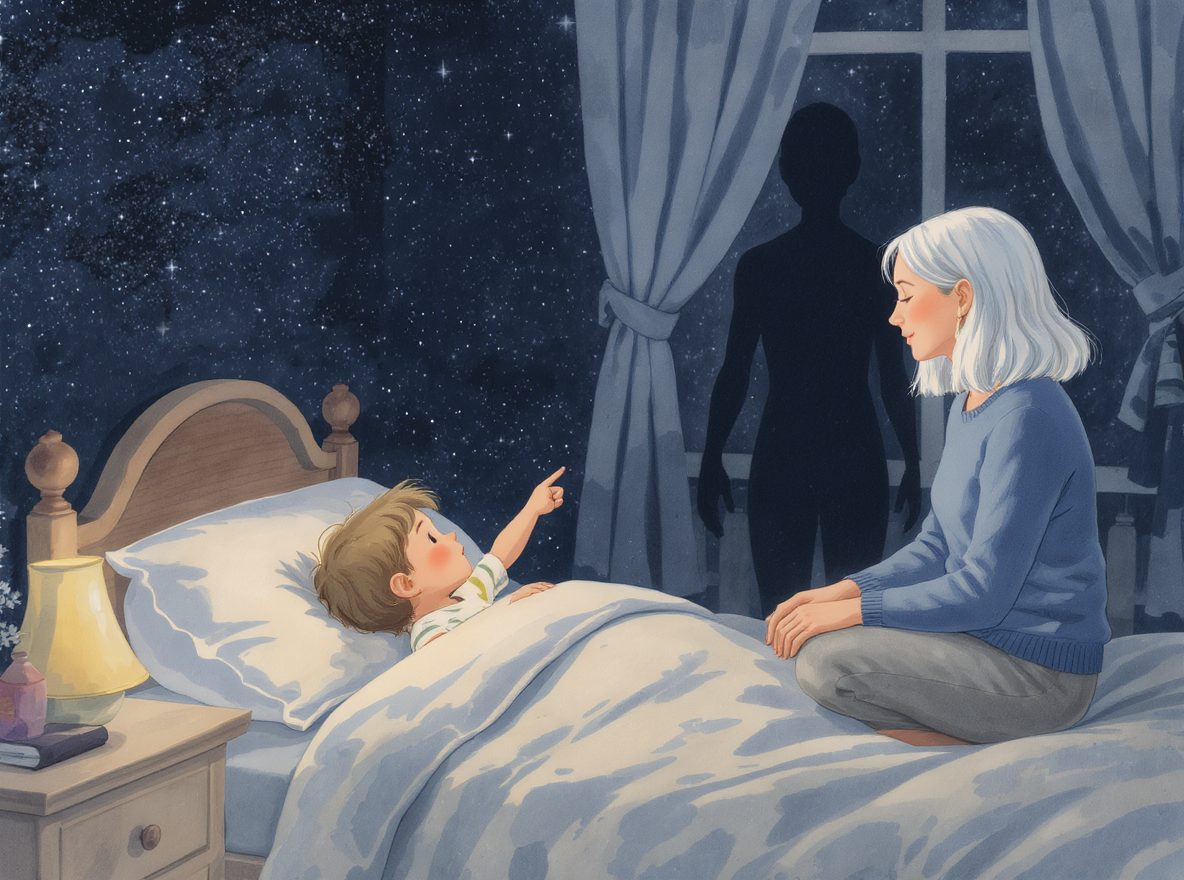
"It's my coat," said Noah. "It's just my coat being sleepy."
"Just your coat being sleepy," Mom agreed.
Noah looked around some more, because now he was curious instead of worried, and curious feels much lighter to carry. In the corner near the closet there was a round, crouching shape, low to the ground, like something waiting. Noah leaned over the edge of the bed to see it better.
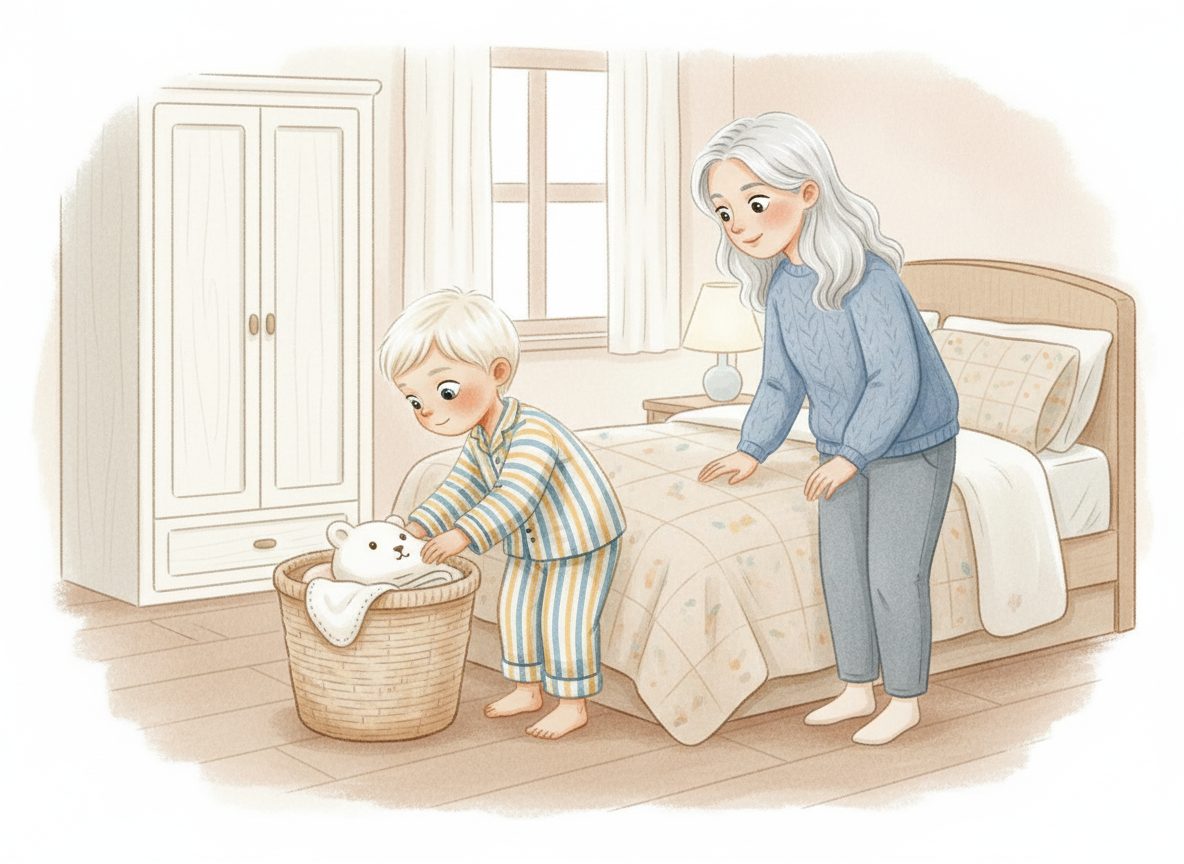
It was his laundry basket, full of soft clean clothes that nobody had folded yet. The bump on top was his bath towel with the hood.
"Hello, basket," Noah whispered, and the basket said nothing at all, because baskets are very good at being quiet.
Next he looked at the wall by the bookshelf, where something long and thin made a stripe all the way up to the ceiling. Noah tipped his head. It was the shadow of his reading lamp, stretched out tall the way shadows like to stretch when they are tired. Shadows always look longer at night, Mom said, the same way a yawn looks longer than a smile.
One by one, Noah checked them all. The humpy shape on the chair was his stuffed elephant sitting on a folded sweater. The two little points near the door were his sneakers with their toes pointing up. The wiggly shape on the curtain was the shadow of the tree outside, moving slowly, the way a tree moves when the wind is only breathing and not blowing.
"Everything in here is mine," Noah said, and he said it in a voice that sounded a bit surprised and a bit proud.
Mom reached over and clicked on the little nightlight by the wall, the one shaped like a small round moon. It glowed a warm honey color, not bright enough to wake anyone up, just bright enough to turn the room from dark to softly dark. In that honey light, the coat rack looked like a coat rack and the basket looked like a basket, and nothing had to be guessed at.
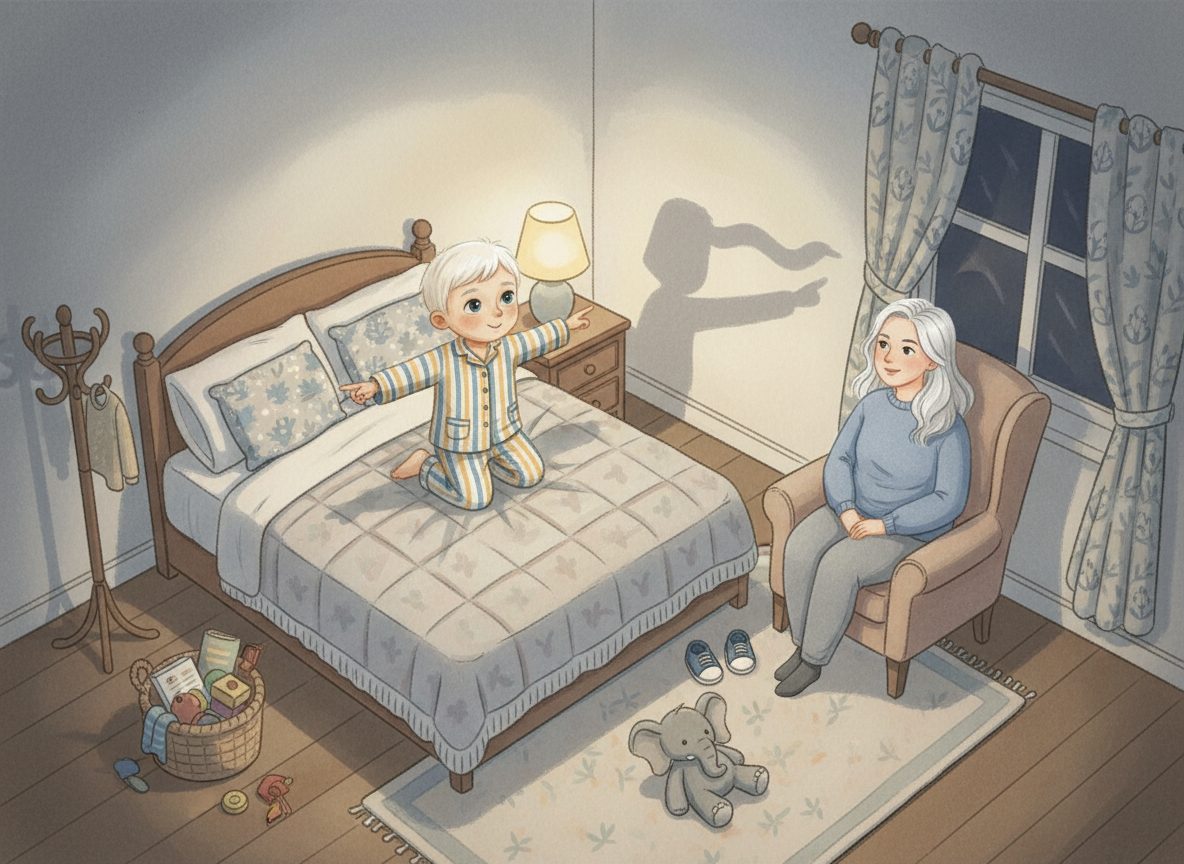
"I made up a thing," Noah said. "A bedtime thing. Want to see?"
"I would love to see," said Mom.
So Noah showed her. He touched his own nose with one finger and said, "Nose." Then he patted the blanket twice and said, "Bed." Then he pointed slowly all the way around the room, at the coat and the basket and the lamp and the elephant and the sneakers and the curtain, and he said, "Mine, mine, mine, mine, mine, mine." Then he put both hands flat on his chest and took one big slow breath in and one long slow breath out, and he whispered, "Goodnight, room."
"That is an excellent ritual," said Mom. "That is one of the best I have ever seen."
"I can do it by myself," said Noah. "Even if you're in the kitchen."
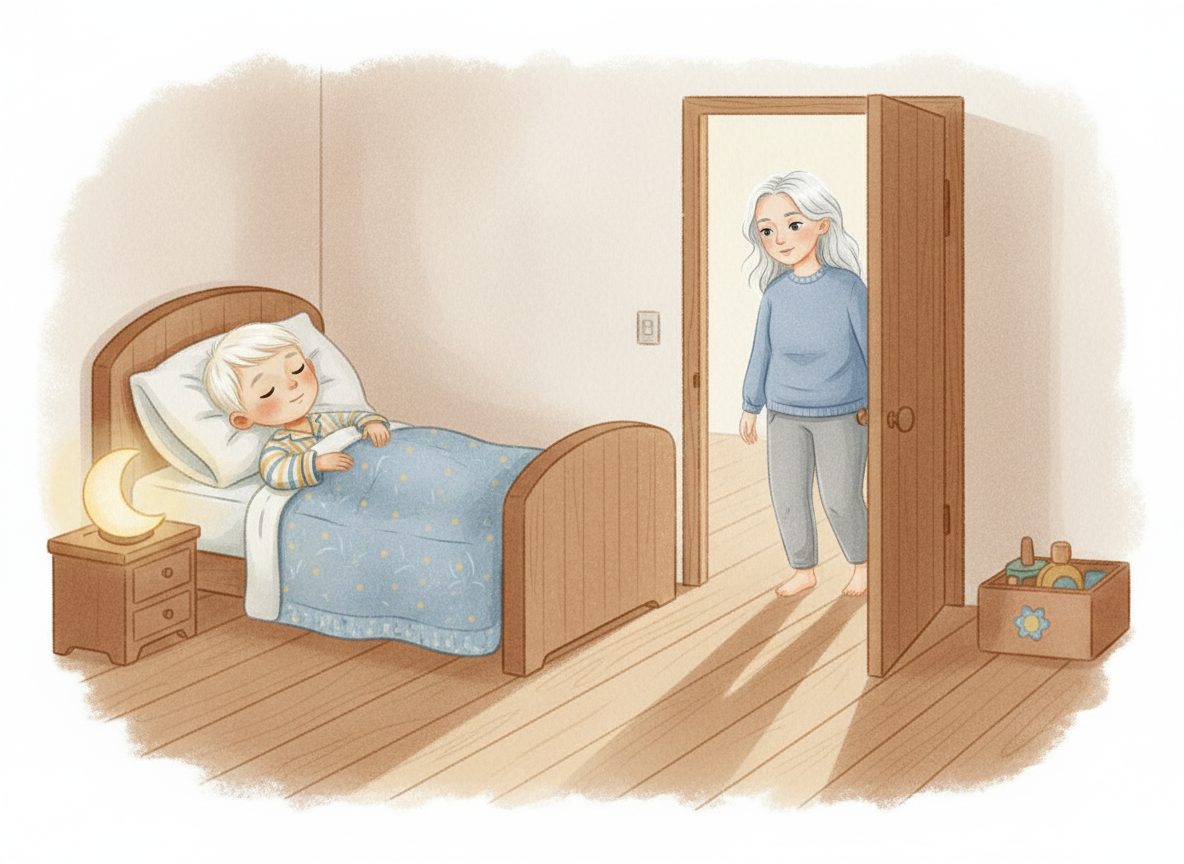
"Even then," said Mom.
Noah did the whole thing one more time, just to practice. Nose. Bed. Mine, mine, mine, mine, mine, mine. Big breath in. Long breath out. Goodnight, room. And the room seemed to settle down around him like a cat curling up, warm and familiar and perfectly ordinary.
Mom pulled the blanket up again and smoothed it over his shoulder. The little moon nightlight glowed in the corner. The door stayed open a crack, with its yellow ribbon of light reaching all the way across the floor to the side of his bed, so that even in his sleep Noah could know exactly where the hallway was, and the kitchen, and Mom.
Outside, the tree moved slowly, slowly. The coat hung on its rack, waiting for morning. The elephant kept its spot on the chair. Noah's eyes were heavy and soft, and his breaths got longer and quieter, in and out, in and out. The room was dark and the room was his, and everything in it was sleeping, just like him.
The end.
Printed from fairydery.com/stories/afraid-of-the-dark/ — free to read and print at home.